
Finding Cedar Rapids Residents
Start with the kind of fact already known. A street address belongs first in the Cedar Rapids City Assessor search, which is limited to city parcels, or in Linn County GIS when the parcel falls outside that system. A person's name fits Iowa Courts Online, the state voter verification form, professional-license records, business filings, and historical directory searches. An old address calls for the Community History Archive, deed records, newspapers, and census material. The Cedar Rapids residents directory works best as a chain of dated sources, not as a claim that one index lists everyone.
Official rolls have real limits. An assessor result identifies the owner of record, not every person living at the site. The public voter form verifies a registrant when the searcher already has required details; it does not publish a neighborhood roster. Recent vital records are restricted to eligible applicants. Renters, relatives, and unlisted household members may leave no public address entry at all. Use two records with matching dates and addresses when identity matters.
- Put a current address into the city assessor search, then note the parcel number, legal description, and assessment date.
- Use the Iowa voter lookup only when the required name, ZIP, house number, and birth date are available.
- Carry an owner name or recorder instrument number into Linn County AVA to find indexed deeds and related filings.
- For an older household, search Cedar Rapids directories and newspapers, then inspect the scanned page around each OCR hit.
- When an existing public record is not online, ask its custodian under Iowa Code Chapter 22.
Keep the record date with every note. Cedar Rapids city limits, postal ZIP areas, and Linn County parcel boundaries do not describe the same geography. A clean search log prevents a similar name or nearby address from becoming a false match.
Cedar Rapids Directory Custodians
Three local custodians form the core records map. The city assessor connects a physical address to a city parcel and its assessed owner. The Linn County Recorder keeps land records, plats, liens, military records, and local vital-record functions. Linn County Elections handles address-based precinct information and voter-list requests, while the Iowa Secretary of State operates the personal registration check. The Cedar Rapids street directory explains the address chain in detail.
Linn County Recorder
935 2nd Street SW
Cedar Rapids, IA 52404
319-892-5420
Cedar Rapids City Assessor
City assessment system
Cedar Rapids, IA
Confirm contact details online
Linn County Elections
County election services
Cedar Rapids, IA
Confirm contact details online
Cedar Rapids Parcel Search Fields
The Cedar Rapids residential parcel search is the strongest current address anchor inside the city assessment system. Its public form does not expose an owner-name filter. Instead, it accepts a parcel number, DBA, physical address, legal description, or lot-acreage range. That makes exact street form important. The result should be read as a dated tax and parcel record, not as a live household list.
| Search control | Best use | Practical limit |
|---|---|---|
| Parcel number | Return to one known city parcel | Requires the local identifier |
| Physical address | Connect a house number and street | Directional quadrant must be correct |
| Legal description | Bridge deeds and changed addresses | Exact recorded wording helps |
| DBA | Find a parcel tied to a business name | Not a resident-name search |
| Lot acreage | Narrow a parcel set | Useful only with other facts |
The Cedar Rapids City Assessor portal shows how address research is framed before any name search begins.
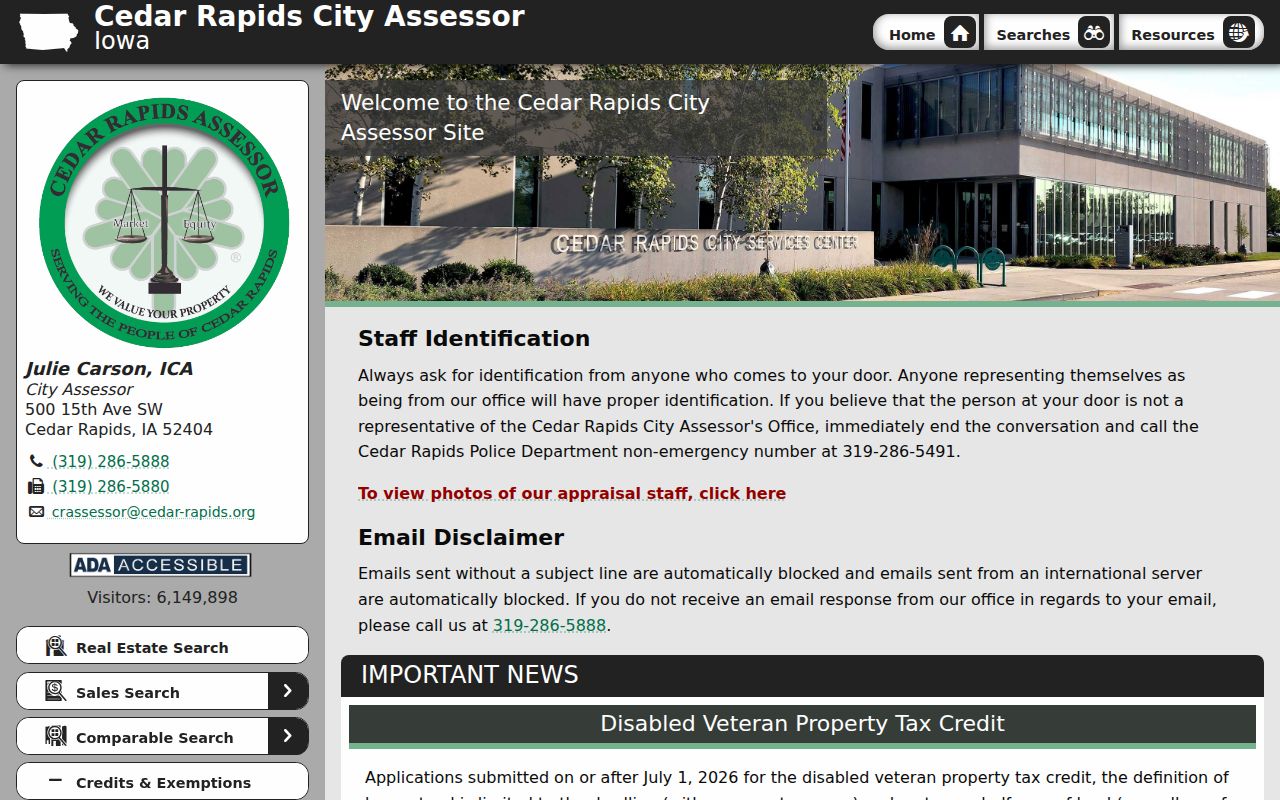
The captured portal is a starting point for city parcels; surrounding Linn County parcels require the county mapping route.
Cedar Rapids Deed Index Trail
The Linn County AVA index connects names to recorded land instruments. Search controls include party name, document type, date range, book and page, instrument number, subdivision, municipality, and legal description. A grantor is the party transferring an interest; a grantee receives it. The index points to the filing and its identifiers. It does not prove who occupied the property on that date.
- Index
- A finding list that identifies a record; it is not always the record image.
- Parcel
- A mapped unit of land with its own local identifier and legal description.
- Roll
- A maintained list created for a specific public function.
- Criss-cross directory
- A directory arranged by street or telephone number instead of only by surname.
Recorder office material reaches back to the 1850s, but the inspected source did not publish an exact AVA online cutoff. If the portal misses an older filing, call or visit the Recorder during its published weekday office hours, then use the State Historical Society of Iowa's Linn County holdings for deed and town-lot series.
Note: A current GIS recorder number often works better than a common surname when moving from a Cedar Rapids parcel into AVA.
Current Cedar Rapids Resident Rolls
Current Cedar Rapids resident research is split among purpose-built systems. None is a master directory. Property records identify assessed owners; election tools verify registration or resolve political geography; recorded documents list parties to transactions; courts publish case-index information; and state license or business systems confirm public professional and organization ties.
| Source | Who It Lists | Keeper | Access |
|---|---|---|---|
| City parcel roll | Assessed parcel owners | Cedar Rapids City Assessor | Free portal |
| Registration verification | One registered voter | Iowa Secretary of State | Required personal fields |
| AVA recorded-document index | Parties to recorded filings | Linn County Recorder | Online index and office |
| Iowa Courts Online | Parties in public case indexes | Iowa Judicial Branch | Public docket search |
| Neighborhood dashboard | Association contacts, not members | City of Cedar Rapids | Public map |
A source may confirm one fact without confirming a residence. License and business addresses can belong to an organization. Court entries describe cases. Association maps define civic areas rather than household membership. For a single-name workflow, the Cedar Rapids resident lookup shows how to compare dates and record identifiers.
Cedar Rapids Voter Tool Limits
The Iowa voter registration lookup requires a name, ZIP code, house number, and birth date to verify an individual's registration and polling information. Linn County's separate address form returns precinct, districts, a sample ballot, and polling-place details. It does not reveal a list of people who live on the block.
A formal voter-list request follows another route. Linn County's request form includes permitted-use certification, selectable fields, delivery terms, and costs. Iowa law limits how voter information may be used. A public lookup result should be recorded with its date because registration and polling locations can change.
The state verification form shows the fields required for a personal check.
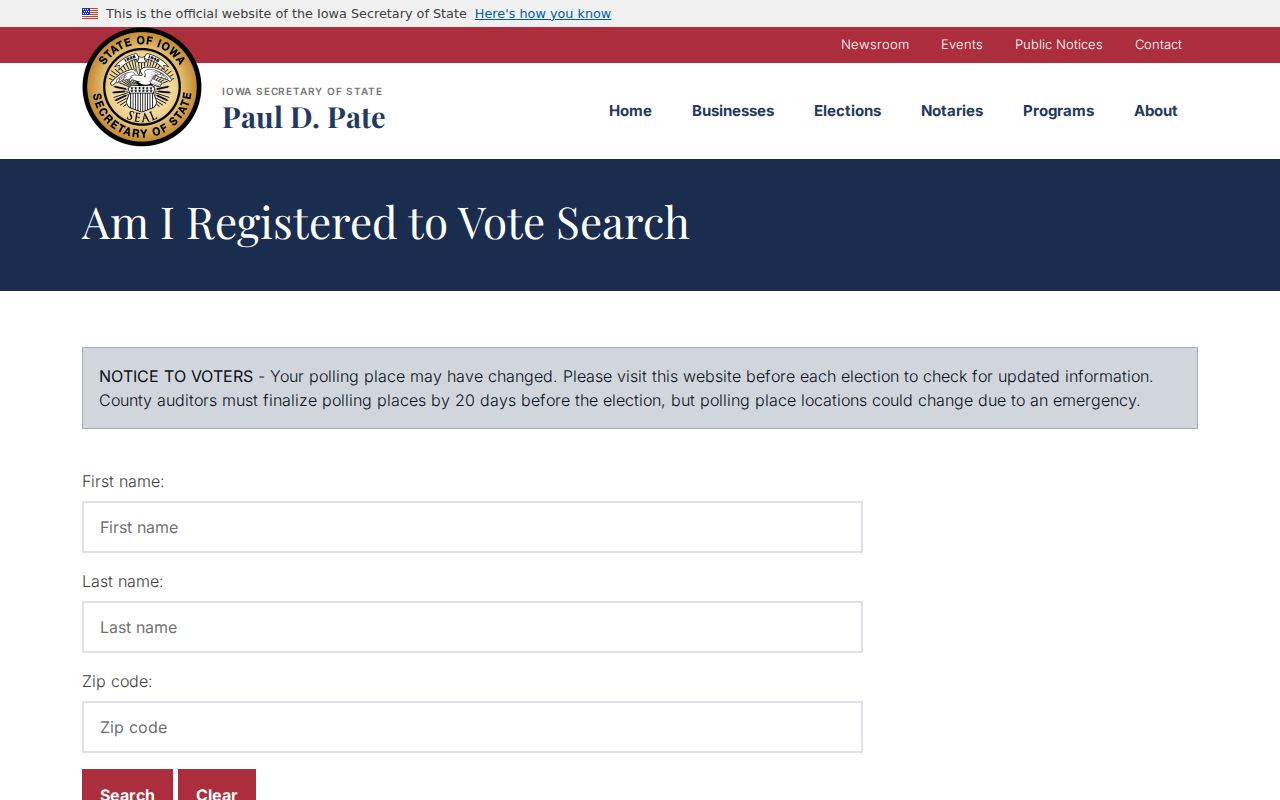
The form's narrow input confirms why it cannot serve as an open Cedar Rapids household directory.
Cedar Rapids Court Name Checks
Iowa Courts Online searches Iowa trial and appellate docket information. Its controls include name, birth date, case ID, and citation details. A docket is the court's dated list of case events. Public index information may identify a party and case number without providing every filed image.
The Linn County Clerk of Court handles local civil, criminal, traffic, juvenile, domestic-relations, and probate-related administration, along with certified court copies. The courthouse terminal and clerk are fallback channels when the web result is incomplete. Federal cases use the Northern District of Iowa and PACER instead. Search the proper jurisdiction before concluding that no case exists.
Common names need a second fact. Compare a birth date, middle name, county, case type, and event date. A name-only match remains a lead, not an identity finding.
Cedar Rapids Vital Record Access
Current birth, death, and marriage certificates are not open-name directory records. Iowa HHS Vital Records and the Linn County Recorder issue eligible certified copies under identity and entitlement rules. State requests require identification, notarization where specified, and the current fee. Historical access differs: state archivist records open after 75 years for births, marriages, and divorces, and after 50 years for deaths and fetal deaths.
The county registrar route can be useful for an eligible Linn County record, while the State Historical Society provides indexes and microfilm for older work. Adoption material follows separate rules. A certified copy is an official copy authenticated by the custodian; an online index entry is only a locator.
Read the Iowa access overview before choosing the state or county channel.
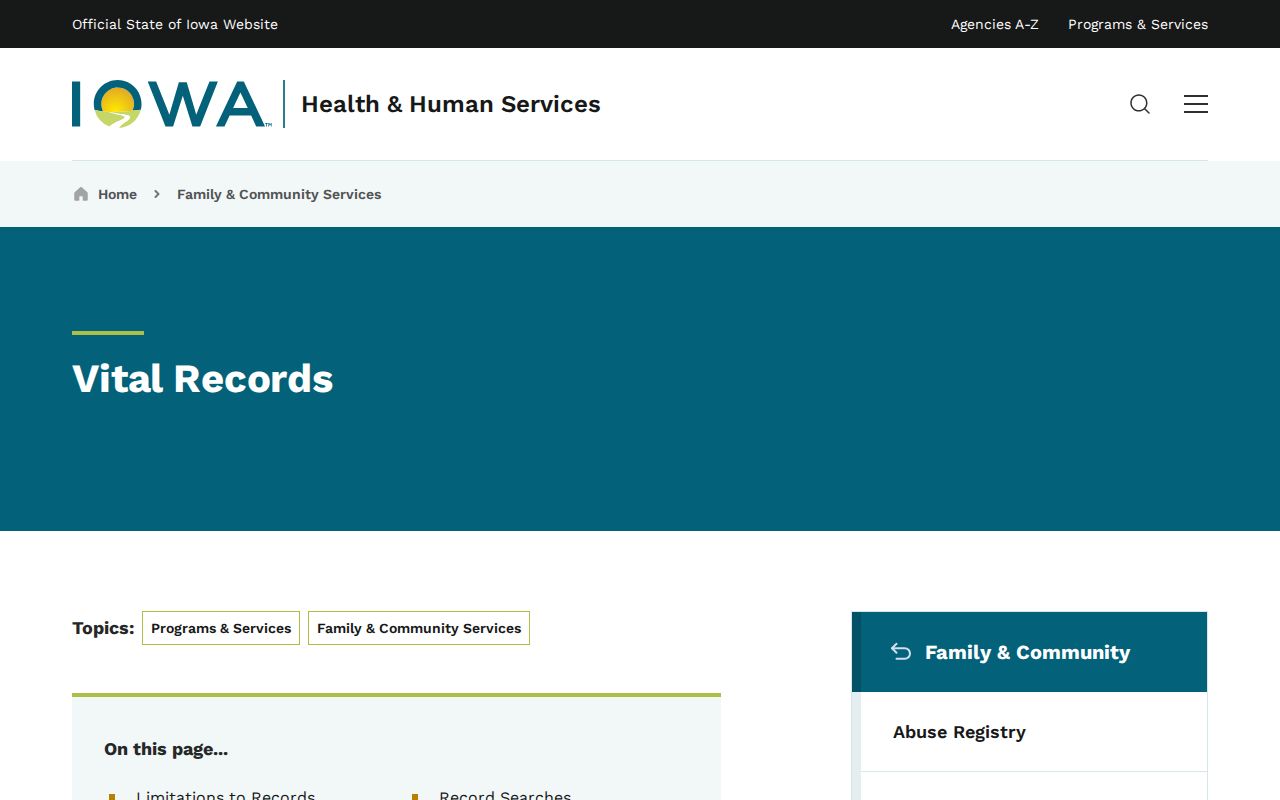
The state page distinguishes public research leads from restricted certified-record requests.
The certified record instructions list submission steps and required proof.
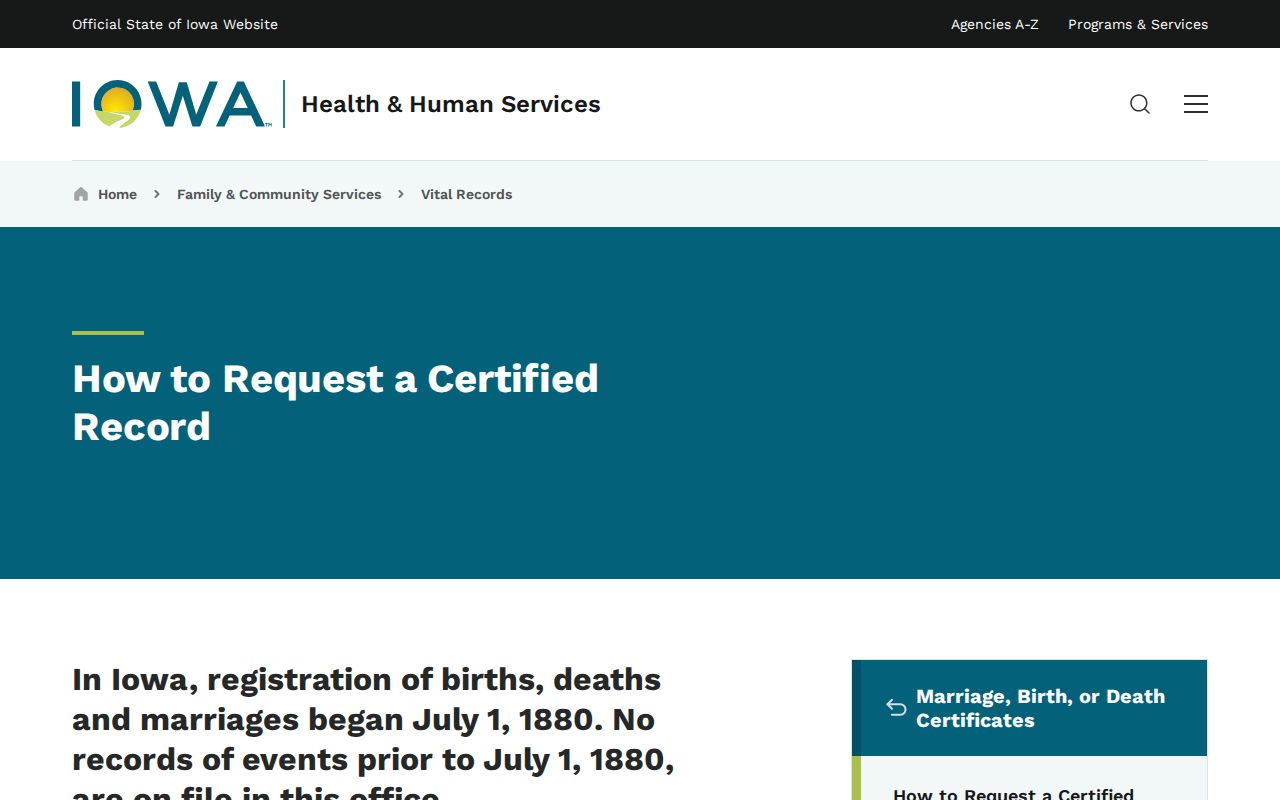
Those instructions should be checked again before payment because Iowa's fee changed in 2026.
Historical Cedar Rapids Directories
The Cedar Rapids Community History Archive reports a directory and phone-book collection spanning 1876 through 2017, with 132,763 pages at the captured date. Printed entries can show a name, spouse or relationship notation, occupation or affiliation, house number, street, and quadrant. The archive's 1895 volume also contains a street guide, public officers, churches, schools, societies, and classified listings. OCR makes those scans searchable, but the page image controls the evidence.
Cedar Rapids Public Library offers genealogy and local-history help, telephone books, newspapers, and access paths into the digital collection. The Genealogical Society of Linn County reports directory holdings reaching earlier than the digital run. The State Historical Society adds county series. The full shelves and reading method belong to the Cedar Rapids city directory page.
The Cedar Rapids Public Library digital resources connect current researchers to the distributed collection.

The library route matters because the 2008 downtown flood helps explain why Cedar Rapids local records now sit across several repositories.
Cedar Rapids ZIP Geography
A postal ZIP, a city boundary, and a parcel polygon answer different questions. Cedar Rapids addresses use quadrant suffixes based on 1st Avenue and the Cedar River, so NE, NW, SE, or SW is part of the address identity. USPS standardizes delivery addresses; Linn County's ZIP map shows regional postal areas; city and county GIS identify parcels and legal descriptions. None of those layers proves who lives at a point.
Standard ZIPs can support a resident search, while PO Box and unique ZIPs cannot define a residential block. Use USPS to confirm delivery form, then use the correct assessor or GIS system for the parcel. Old directories may predate ZIP codes, so a street name, quadrant, and house number matter more in historical searches.
Note: Keep postal, municipal, and parcel geography in separate columns when comparing Cedar Rapids records.
Cedar Rapids Records Change Dates
Several Cedar Rapids access points changed in 2026. Iowa adjusted the vital-copy fee, election officials issued updated voter-address direction, Linn County redesigned web pages, and State Historical Society storage conditions affected planning for archival access. A saved form or old bookmark may therefore describe the wrong price, location, or route.
Date each screenshot and search result. Confirm office details on the custodian's current page before mailing a request. The Iowa Public Information Board's Chapter 22 guidance explains that requests may be oral or written, seek existing records, and carry reasonable direct costs. It does not require an office to create a new household list.
The official public-record guidance gives the current framework for a Cedar Rapids request.
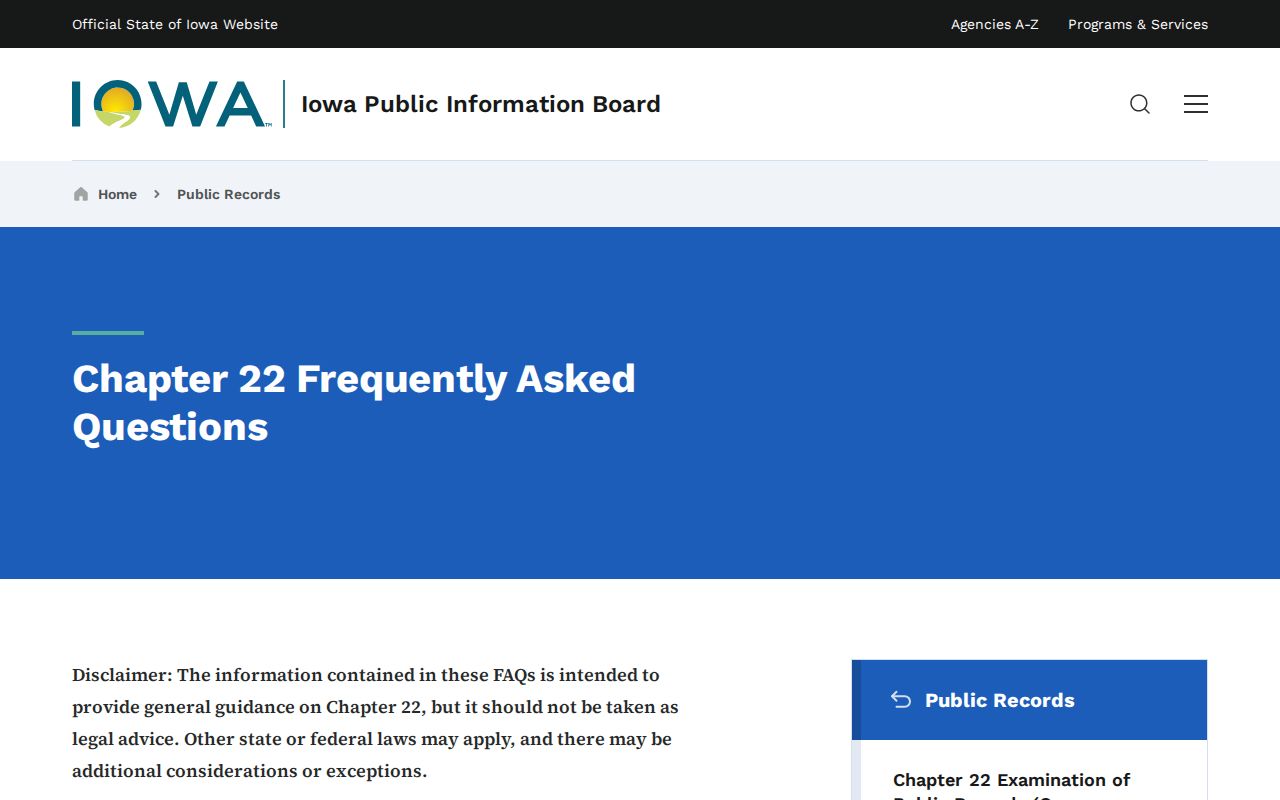
The captured guidance reinforces that the custodian supplies existing records subject to exemptions, confidentiality laws, and redaction.
Lawful use. Use Cedar Rapids records for lawful personal research. Never use an address or resident record to stalk, harass, intimidate, or harm anyone.
The official source is stronger than a commercial people-finder because it states the keeper, record purpose, and update context. A commercial result may blend old and current data without showing how a claim was made.
Cedar Rapids County Seat Shift
Early Linn County research may lead away from Cedar Rapids. Marion was the earlier county seat, and a 1919 vote moved the administrative center to Cedar Rapids. May's Island then became part of the courthouse story. A person searching only for a Cedar Rapids office name can miss the older custody path even when the land or family stayed in the same county.
Use the record date to decide which place name and repository belong in the search. The Linn County Recorder covers current county recording work, while State Historical Society holdings supply older deeds, town-lot records, probate, naturalization, cemetery, and vital-index series. This local shift is one reason a complete residents directory search needs both a city lane and a county history lane.
Note: A changing county seat affects record custody and labels, not the historic location of the person or parcel being researched.