
Finding Cedar Rapids Residents
Start from the fact already in hand. A street address points to the Cedar Rapids City Assessor for parcels inside the limits. For everything beyond them, turn to Linn County GIS. A name opens more doors. Iowa Courts Online takes names. So do the state voter verification form, professional-license records, business filings, and historical directory searches. An old address leads to the Community History Archive, deed records, newspapers, and census material. Treat the Cedar Rapids residents directory as a chain of dated sources. No single index lists everyone.
Official rolls carry real limits. An assessor record names the owner of record, not every resident at the address. The public voter form verifies one registrant when the details are already known. It publishes no neighborhood roster. Recent vital records stay closed to all but eligible applicants. Renters, relatives, and unlisted household members can leave no public address entry at all. When identity matters, match two records on dates and addresses.
- Put a current address into the city assessor search, then note the parcel number, legal description, and assessment date.
- Use the Iowa voter lookup only when the required name, ZIP, house number, and birth date are available.
- Carry an owner name or recorder instrument number into Linn County AVA to find indexed deeds and related filings.
- For an older household, search Cedar Rapids directories and newspapers, then inspect the scanned page around each OCR hit.
- When an existing public record is not online, ask its custodian under Iowa Code Chapter 22.
Keep the record date. Cedar Rapids city limits, postal ZIP areas, and Linn County parcel boundaries describe three different geographies, so a dated search log stops a similar name or nearby address from becoming a false match.
Cedar Rapids Directory Custodians
A few local offices hold the pieces. The city assessor ties a physical address to a Cedar Rapids parcel. It also names the assessed owner. The Linn County Recorder keeps land records, plats, liens, military records, and local vital-record functions. Linn County Elections handles precinct information tied to addresses. It also takes voter-list requests. The Iowa Secretary of State runs the personal registration check. Together these custodians form the core records map for the city. The Cedar Rapids street directory walks through the address chain in detail.
Linn County Recorder
935 2nd Street SW
Cedar Rapids, IA 52404
319-892-5420
Cedar Rapids City Assessor
City assessment system
Cedar Rapids, IA
Confirm contact details online
Linn County Elections
County election services
Cedar Rapids, IA
Confirm contact details online
Cedar Rapids Parcel Search Fields
Inside the city assessment system, the Cedar Rapids residential parcel search is the strongest current address anchor. Its public form exposes no owner-name filter. Instead, it accepts a parcel number, DBA, physical address, legal description, or lot-acreage range. Exact street form matters here. The result is a dated tax and parcel record. It is not a live household list.
| Search control | Best use | Practical limit |
|---|---|---|
| Parcel number | Return to one known city parcel | Requires the local identifier |
| Physical address | Connect a house number and street | Directional quadrant must be correct |
| Legal description | Bridge deeds and changed addresses | Exact recorded wording helps |
| DBA | Find a parcel tied to a business name | Not a resident-name search |
| Lot acreage | Narrow a parcel set | Useful only with other facts |
Address research comes first at the Cedar Rapids City Assessor portal, well before any resident name search takes shape there.
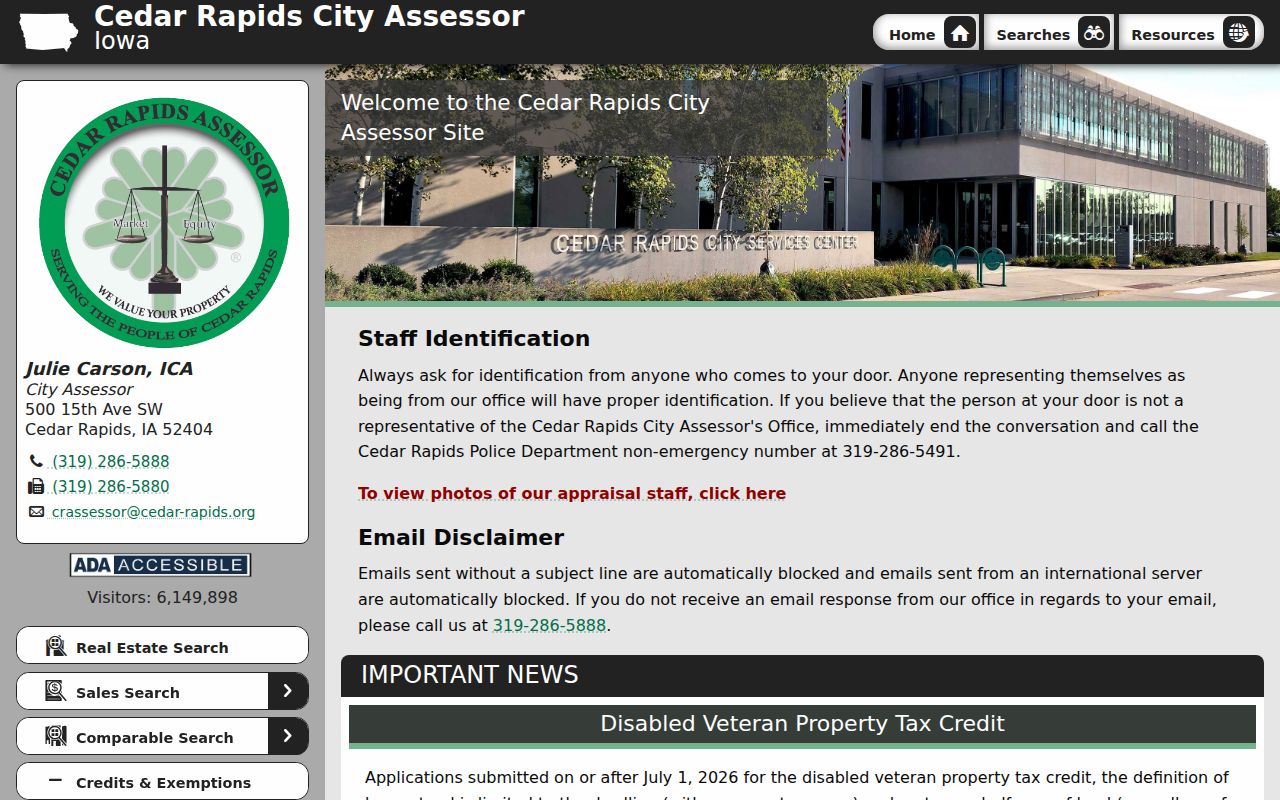
The portal is a starting point for city parcels. Surrounding Linn County parcels require the county mapping route instead.
Cedar Rapids Deed Index Trail
The Linn County AVA index ties names to recorded land instruments. Filters cover party name, document type, and date range. Searchers can also query by book and page, instrument number, subdivision, municipality, and legal description. A grantor transfers an interest. A grantee receives it. Each hit points to a filing and its identifiers. It proves nothing about who actually occupied the Cedar Rapids property that day.
- Index
- A finding list that identifies a record; it is not always the record image.
- Parcel
- A mapped unit of land with its own local identifier and legal description.
- Roll
- A maintained list created for a specific public function.
- Criss-cross directory
- A directory arranged by street or telephone number instead of only by surname.
Recorder office material in Linn County reaches back to the 1850s. The AVA portal publishes no exact online cutoff. Older filings sometimes sit outside it. When one does, call or visit the Recorder during its published weekday office hours. The State Historical Society of Iowa's Linn County holdings carry deed and town-lot series as a backup. Moving from a Cedar Rapids parcel into AVA? Try a current GIS recorder number before a common surname.
Note: A GIS recorder number often beats a surname for parcel searches.
Current Cedar Rapids Resident Rolls
No single system holds current Cedar Rapids residents. Research splits across purpose-built rolls instead. Property records name assessed owners, election tools verify registration and political geography, and recorded documents list parties to transactions. Courts publish case-index information, while state license and business systems confirm public professional and organizational ties.
| Source | Who It Lists | Keeper | Access |
|---|---|---|---|
| City parcel roll | Assessed parcel owners | Cedar Rapids City Assessor | Free portal |
| Registration verification | One registered voter | Iowa Secretary of State | Required personal fields |
| AVA recorded-document index | Parties to recorded filings | Linn County Recorder | Online index and office |
| Iowa Courts Online | Parties in public case indexes | Iowa Judicial Branch | Public docket search |
| Neighborhood dashboard | Association contacts, not members | City of Cedar Rapids | Public map |
One confirmed fact is not a confirmed residence. A license or business address can belong to an organization, and court entries describe cases rather than households. Association maps define civic areas, not membership. For a single-name search, the Cedar Rapids resident lookup shows how to compare dates and record identifiers across these rolls.
Cedar Rapids Voter Tool Limits
Iowa keeps its voter records behind a gated search. The Iowa voter registration lookup asks for a name, ZIP code, house number, and birth date. Only then will it confirm one person's registration and polling place. Linn County runs a separate address form. It returns the precinct, district assignments, a sample ballot, and polling location. Neither tool hands over a street list of who lives on the block.
A full voter list travels a different route in Linn County. The county's request form spells out permitted-use certification and the fields you can select. It also covers delivery terms and the costs involved. Iowa law restricts how voter information may be used. Any result pulled from a public lookup is worth recording with its date. Registration status and polling places shift over time.
The state verification form displays the fields required for a personal check.
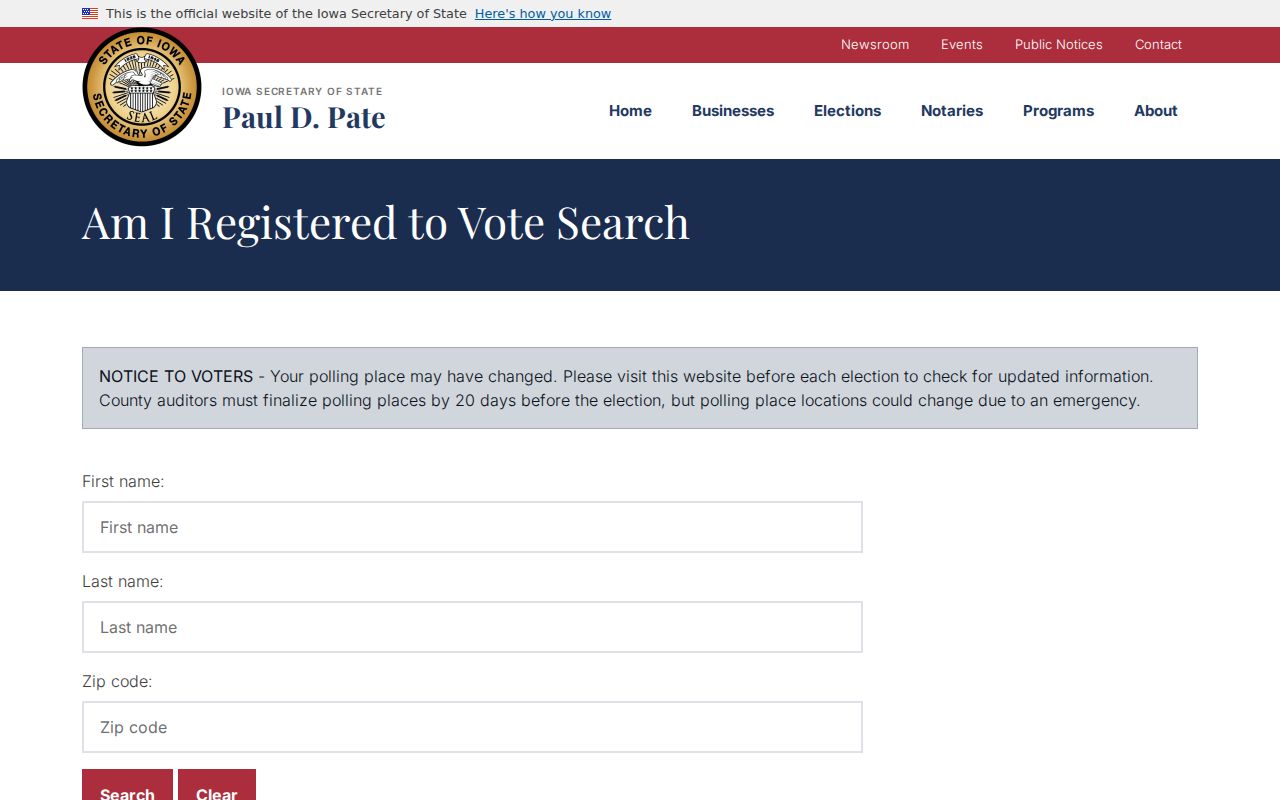
That narrow input is exactly why the tool cannot act as an open Cedar Rapids household directory.
Cedar Rapids Court Name Checks
Iowa Courts Online covers trial and appellate dockets statewide. Search fields include name, birth date, case ID, and citation number. A docket lists dated case events. The index may name a party and case number. Full filed images are not always attached.
Local cases run through the Linn County Clerk of Court. That office administers civil, criminal, traffic, juvenile, domestic-relations, and probate matters and issues certified copies. The courthouse terminal and the clerk himself are fallbacks when a web result seems thin. Federal matters belong to the Northern District of Iowa and PACER. Always confirm the jurisdiction before assuming no case exists.
Common surnames demand a second fact. Match a birth date, middle name, county, case type, or event date. A name-only hit is only a lead.
Cedar Rapids Vital Record Access
Birth, death, and marriage certificates sit outside the open-name records. You would not browse them in a Cedar Rapids residents directory. Iowa keeps them closed to casual lookup. Iowa HHS Vital Records and the Linn County Recorder issue certified copies only to applicants. Each applicant must clear identity and entitlement rules. A state request calls for identification and the current fee. Notarization applies where the form demands it. Older material behaves differently. The state archivist opens births, marriages, and divorces after 75 years. Deaths and fetal deaths open after 50 years.
Pick your channel with the record's age in mind. The county registrar handles eligible Linn County copies. The State Historical Society offers indexes and microfilm for the older generations a street directory cannot reach. Adoption files follow their own separate rules. One distinction matters here. A certified copy is the official document, authenticated by its custodian. An online index entry merely points you toward it, the way a ZIP code directory entry points to a parcel rather than the deed itself. Read the state access overview before choosing between the state and county routes.
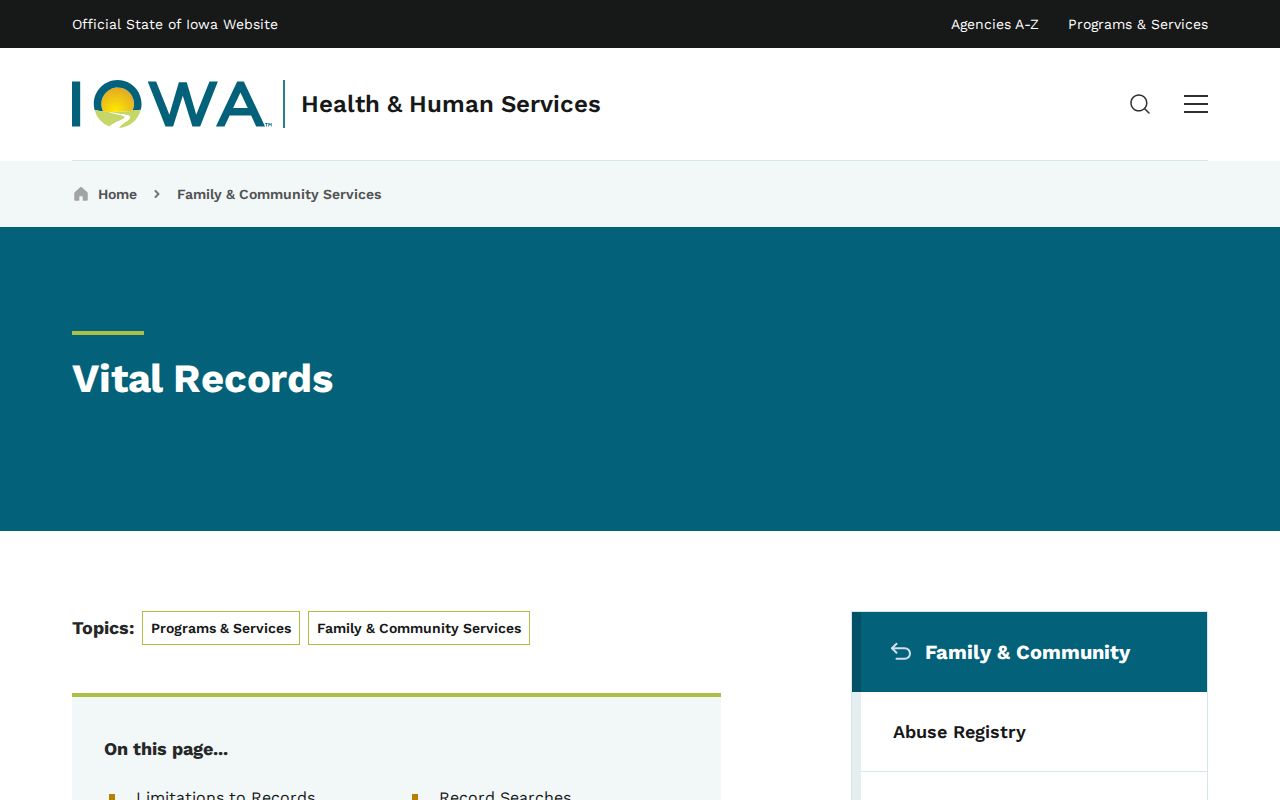
The state page separates open research leads from restricted certified-record requests.
The certified record instructions lay out submission steps and the proof required.
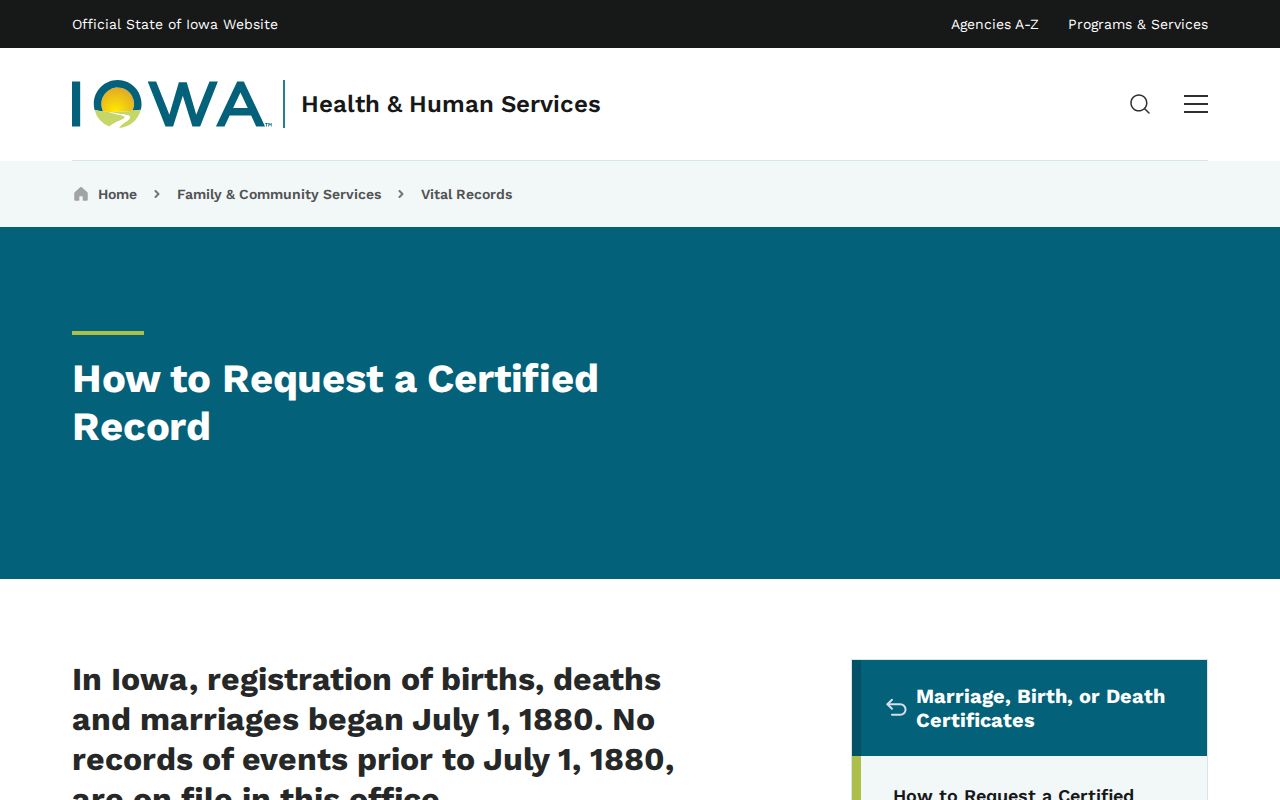
Those instructions should be checked again before payment because Iowa's fee changed in 2026.
Historical Cedar Rapids Directories
The Cedar Rapids Community History Archive holds directories and phone books spanning 1876 through 2017. The collection runs some 132,763 pages deep. A printed entry might list a name and a spouse or relationship note. It may also carry an occupation, a house number, a street, and a quadrant. The 1895 volume adds a street guide. It also covers public officers, churches, schools, societies, and classified listings. OCR makes the scans searchable. The page image, though, remains the evidence that counts.
Cedar Rapids Public Library offers genealogy and local-history help. It also holds phone books, newspapers, and paths into the digital collection. The Genealogical Society of Linn County reports directory holdings older than the digital run. The State Historical Society adds county series. For the full shelves, see the Cedar Rapids city directory page. It explains how to read them.
The Cedar Rapids Public Library digital resources link today's researchers to this spread-out collection.

The library route matters here. The 2008 downtown flood helps explain why Cedar Rapids local records now sit across several repositories.
Cedar Rapids ZIP Geography
A postal ZIP, a city boundary, and a parcel polygon each answer a different question. Cedar Rapids addresses carry quadrant suffixes tied to 1st Avenue and the Cedar River. So NE, NW, SE, or SW is part of the address itself. USPS standardizes delivery addresses. Linn County's ZIP map shows regional postal areas. City and county GIS identify parcels and legal descriptions. No layer alone proves who lives at a spot.
Standard ZIPs can support a resident search. PO Box and unique ZIPs cannot define a residential block. Confirm the delivery form with USPS first. Then move to the right assessor or GIS system for the parcel. Historical searches need extra care. Old directories predate ZIP codes, so they lean on street name, quadrant, and house number instead.
Note: Keep postal, municipal, and parcel geography in separate columns when comparing Cedar Rapids records.
Cedar Rapids Records Change Dates
Several Cedar Rapids access points changed in 2026. Iowa adjusted the vital-copy fee. Election officials issued new voter-address direction. Linn County redesigned its web pages, and State Historical Society storage conditions shaped archival planning. A saved form or stale bookmark may quote the wrong price, location, or route.
Date every screenshot and search result. Confirm office details on the custodian's current page before mailing anything. The Iowa Public Information Board's Chapter 22 guidance says requests may be oral or written, must seek existing records, and can carry reasonable direct costs. It does not force an office to build a new household list.
The official public-record guidance states the current framework for any Cedar Rapids request.
The official guidance confirms the custodian supplies existing records, subject to exemptions, confidentiality laws, and redaction.
Lawful use. Use Cedar Rapids records for lawful personal research. Never use an address or resident record to stalk, harass, intimidate, or harm anyone.
An official source beats a commercial people-finder. It names the keeper, the record's purpose, and its update context. A commercial result may blend old and current data without showing how any claim was made.
Cedar Rapids County Seat Shift
County-seat history matters more than people expect in Linn County. Marion held the seat first. A 1919 vote moved the administrative center to Cedar Rapids. May's Island then entered the courthouse story, and the move shaped which office keeps which records today. Someone chasing only a Cedar Rapids office name can miss the older custody path entirely. Land and family often stayed in the same county the whole time. The records did not stay put.
Let the record date guide the search. Current recording work goes through the Linn County Recorder. Older material sits elsewhere. State Historical Society holdings hold earlier deeds, town-lot records, probate files, naturalization papers, cemetery records, and vital indexes. A full residents directory search in this area therefore needs two lanes. One lane follows the city. The other follows the county's record history.
Note: A county-seat change moves record custody and labels, never the historic location of the person or parcel being researched.